Education Trips
By admin • August 21, 2025
Education Trips
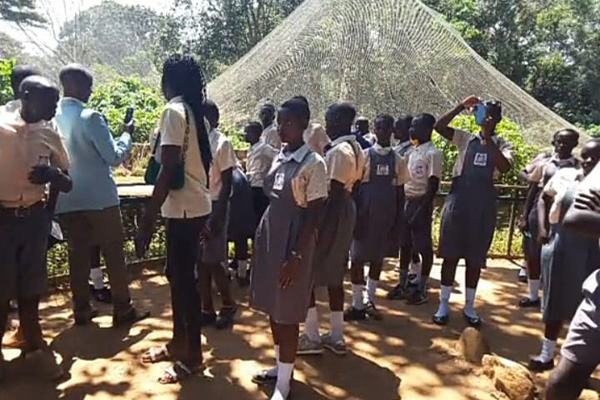
Education is more than memorizing facts, taking exams, and writing essays. True education is about growth — personal, social, intellectual, and emotional. And some of the most powerful moments in a student’s life happen not behind a desk, but out in the world. Educational trips, also known as field trips, are not just about leaving school for a day or two. They’re transformative journeys into real-life learning, designed to ignite curiosity, deepen understanding, and stretch students far beyond the limits of the classroom. They offer exposure to people, places, and perspectives that students might never encounter otherwise. Whether it’s the first time a child walks through a museum, watches a live play, climbs a mountain trail, or visits a historical site they’ve only read about — that moment sticks. It lodges itself in the memory, colors the way they see the world, and sometimes even shifts the direction of their lives. Field trips are where education meets experience, where students are no longer passive recipients of information but active participants in the world around them. It’s one thing to study the economy in a textbook; it’s another to talk to a local entrepreneur. It’s one thing to read about marine life; it’s another to stand at the ocean’s edge, feel the salt spray, and see a crab scurry over your shoe. Education trips create those moments — the ones that stay long after exams are forgotten.
When Theory Becomes Reality
There is an undeniable power in learning through immersion. In a classroom, students might study geography by looking at maps and reading about landforms. On a trip, they walk those maps. They climb hills, see how rivers carve through landscapes, feel different climates, and hear how nature sounds in real time. Abstract concepts become concrete. Students can touch rocks instead of identifying them from photos. They can observe plant life cycles by walking through gardens and forests. They can visit science centers, archaeological digs, and natural habitats, turning passive knowledge into active exploration. Suddenly, gravity isn’t just a concept discussed in physics class — it’s a thrill felt while bungee jumping at a science-based adventure park. Photosynthesis becomes more than a diagram when students are breathing in the oxygen-rich air of a botanical garden. Learning shifts from the realm of theory to a fully sensory experience. Even math can take on new life during a field trip. Budgeting for lunch, converting currency, calculating distances — these aren’t just class exercises; they become real problems with real consequences, which makes the learning process far more engaging and lasting. Teachers become facilitators rather than lecturers. Students take initiative, ask their own questions, and learn to observe and reflect. They remember these lessons not because they had to — but because they lived them.
Building Minds, Growing People
While the academic benefits of education trips are clear, their impact on personal development is just as significant — if not more. When students leave the familiar routine of their daily school environment, they are forced to adapt, problem-solve, and grow. They’re no longer operating under the protective bubble of structured lessons and predictable schedules. Instead, they are navigating real-world situations: figuring out directions, managing time, communicating with strangers, resolving conflicts, handling disappointments, and stepping out of their comfort zones. These are the moments when character is shaped. A shy student might speak up for the first time when ordering food in another language. A disengaged learner might suddenly find passion while hiking through a forest, learning about ecology from a ranger instead of a whiteboard. A student who’s struggled socially might find connection while working in a group during a museum scavenger hunt. Beyond that, trips develop teamwork. They teach students to work with peers they may not know well, to rely on one another for support and encouragement, and to solve challenges as a unit. Teachers, too, often see their students in a new light — recognizing strengths, leadership, and resilience that never emerged in the classroom. There is also the matter of independence. Even supervised trips allow students space to make choices, reflect on those decisions, and take responsibility for themselves. From packing the right clothes to managing their personal items and following group rules, they learn self-management — a skill they will need for life.
Types of Education Trips
Educational trips can take many forms, and each type serves a unique purpose depending on the focus of the curriculum, the age of the learners, and the desired outcomes. Cultural and historical trips bring students face to face with the past, allowing them to walk through ancient ruins, study architectural marvels, and listen to guides who bring history to life through storytelling. Instead of memorizing dates and battles, students begin to see history as a living, evolving narrative, rich with emotion and consequence. They may visit museums, cultural centers, or heritage sites, connecting textbooks to tangible remnants of history. Science-based trips offer the chance to explore everything from marine ecosystems and geological formations to environmental conservation efforts and astronomical observatories. Imagine a class spending a night at a planetarium, tracking constellations, or a week near a nature reserve, collecting water samples and testing them in real-time. These trips allow learners to engage in inquiry-based learning, turning scientific questions into hands-on investigation. Then there are arts and cultural immersion trips. Students might take part in a pottery workshop with local artisans, attend a traditional music performance, or participate in a dance class from a different culture. These experiences foster creative expression and cross-cultural understanding, helping learners appreciate diverse traditions and viewpoints. Finally, community-focused trips connect students with civic life. They may visit local government offices, community farms, cooperatives, or NGOs. These trips are not only educational — they are transformative, showing students how society functions and how they, too, can contribute.
Why Educational Trips Matter
The importance of education trips extends far beyond a temporary break from routine. These experiences are often the first real exposure some students have to the world outside their communities. They offer equity in experience — giving every child, regardless of background, a chance to see something new, ask big questions, and imagine possibilities for their future. A trip to a university campus might inspire a young student to pursue higher education. A visit to a wildlife center could spark a lifelong love of conservation. These experiences are catalysts. They help students connect dots between what they’re learning and who they want to become. They are also crucial for bridging social gaps. On a trip, students interact with peers in new ways. Social hierarchies blur. New friendships form. Teachers engage with students beyond grades and discipline. Parents who volunteer see their children through new eyes. What happens on an educational trip doesn’t stay on the bus — it often reshapes relationships, mindsets, and aspirations. In a rapidly changing world where soft skills, emotional intelligence, and global awareness are increasingly valued, educational trips prepare students in ways the classroom simply cannot. They offer an education for the whole person — mind, body, and spirit. And perhaps most importantly, they remind us all that the world is still the best teacher of them all.






We'll get back to you within 24-48 hours.
Direct inquiries: info@africanibisadventures.com | +256 709 702 685